Integrating Electronics and Software in Product Development
Hardware and software no longer operate in silos - in today’s smart products, the two evolve together. At Industrial Design Consultancy (IDC), our approach to product development reflects this shift, with integrated teams building complete, connected solutions. We specialise in integrating electronic hardware and embedded software to deliver high-performing, user-centred solutions.
Our cross-functional team brings together electronics engineers, software developers, product designers and mechanical engineers under one roof. This close collaboration allows us to design, prototype, and optimise intelligent systems that function reliably in real-world use, across regulated sectors including medical, consumer, industrial and transport.

Engineering Intelligence Into Products
IDC approaches each project with the belief that electronics and software should serve the product’s broader purpose, supporting usability, safety, performance, and manufacturability.
Whether it's a connected health device, a robotic interface, or a powered transport control system, we ensure that electronics and firmware are developed in harmony with the physical and digital experience. This includes sensor integration, motor control, wireless connectivity, user interfaces and more.
As an electronics design consultancy, our focus is not only on making systems work, but making them work well in context, with the precision and robustness that modern users demand.
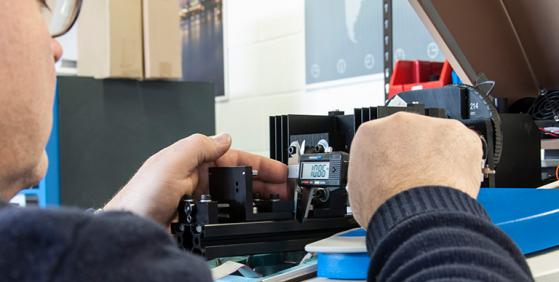
Our engineers don’t just design PCBAs and write code, they work alongside designers and user researchers to ensure every interaction is meaningful. This means considering how a button responds to touch, how a device communicates data, or how visual feedback supports a medical decision. We develop embedded systems using industry-standard platforms and custom architectures, optimising for power consumption, speed, and reliability. Whether building real-time systems, Bluetooth-enabled devices or microcontroller-driven actuators, we develop, simulate and test in-house to maintain full control over quality and performance. Close integration of hardware and software also allows for greater flexibility and refinement: features can evolve during development based on test results or user feedback, without major system rework.Seamless Hardware-Software Integration

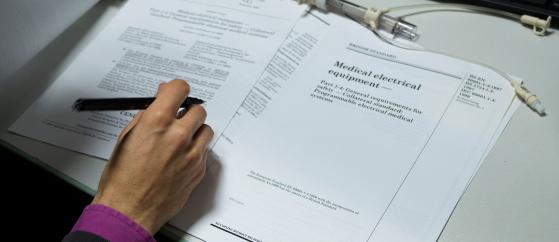
Many of the products we develop operate in regulated or safety-critical settings, such as hospitals, laboratories or moving vehicles. Our process is structured to meet the requirements of ISO 13485 and other relevant standards, with robust risk management and design validation built in. In the medical sector, for example, our team ensures electronic and software systems align with IEC 60601, ISO 14971 and usability engineering best practices. We support clients through documentation, testing, and submission stages, providing not just development but long-term product assurance. Our in-house team prototypes systems early and often, both as standalone electronics and integrated within the full product. This approach enables quick iteration and de-risking of technical challenges from the outset. As more clients explore connected ecosystems, we also support cloud and app integration where needed. For example, we can develop products that send real-time diagnostics to clinicians, or devices that sync usage data across multiple platforms. Working from system architecture through to final interface, we help ensure that each product becomes a coherent part of a connected experience.Supporting Regulated and High-Risk Environments
From Prototype to Connected Platform
A Proven Track Record in Smart Product Development
Over the years, we’ve delivered a wide range of intelligent devices across industries:
In healthcare, we helped XFT develop an EMG-responsive rehabilitation glove that combines biofeedback with pneumatic assistance to aid stroke recovery, intelligently responding to patient input in real time.
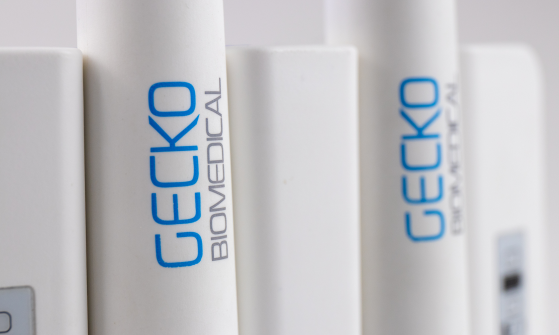
For surgical applications, our team engineered the Setalum surgical adhesive curing device for Gecko Biomedical (now Tissium). This pen‑sized, rechargeable 405 nm light source was built to cure a specialized vascular adhesive during complex reconstructive surgeries. Designed to be sterile and easy to use, it features a collimated lens and custom prism to ensure consistent beam intensity regardless of device orientation.
In medical diagnostics, we partnered with Thermology Health and the National Physical Laboratory to develop a clinical Thermal Imaging Device for identifying early-stage diabetic foot ulceration, a condition that leads to an estimated 20–30 amputations per day in the UK.
The device delivers full foot temperature mapping with ten times the accuracy of existing products. IDC led the complete development lifecycle, encompassing industrial design, mechanical and electrical engineering, software development, UX/UI design, prototyping, and full CE and UKCA certification - all achieved in just four months. The result is an intuitive, clinician-ready device that brings together hardware precision and software intelligence to support faster and more accurate clinical decisions.
These projects exemplify how our team at IDC brings together electronics and software within full product systems, supporting both innovation and implementation.
Bringing Smart Ideas to Life
As an end-to-end electronics design consultancy, we don’t just build circuits: we help our clients create thoughtful, intelligent products that deliver real value to users.
Whether you’re developing a connected medical device, control system, or smart interface, IDC has the expertise and infrastructure to support every stage, from first concept to global deployment.
Explore more about IDC’s services and how we bring intelligent electronics into every sector we work across.