Sustainable Product Design & Materials: Frameworks, Methods & Case Studies
Sustainable product design only works when it is truly specific with evidence and objectives.
Vague intent rarely survives contact with cost and manufacturing reality. The projects that deliver real change tend to be grounded in evidence, supported by clear frameworks, and shaped by decisions that hold up across the whole lifecycle.
In practice, this means understanding impact across the supply chain and making design choices that reduce carbon and waste without compromising what makes a product commercially viable.
We have shared a range of practical tools and guidance within our Resources for Sustainable Design, created to help teams turn sustainability from green dreams into a clearer working process.
What Does Sustainable Product Design Actually Require?
Sustainable product design discussions can often drift to over-importance on materials. They matter, of course, but they are only one part of the picture. The largest gains typically come from early decisions that shape how a product is made, how long it lasts, how it is repaired, and what happens at end-of-life.
A sustainable solution should also remain a good product. If the design fails in reliability, usability or desirability, it will be replaced sooner and will only create more waste. For this reason, sustainable product design needs to sit alongside performance and manufacturability from the outset.
Frameworks That Keep Sustainability Grounded
A framework is useful when it prevents teams from optimising the wrong thing. In sustainable product design, the risk is focusing on a single metric while ignoring knock-on effects elsewhere.
Life Cycle Assessment is one of the most reliable ways to avoid this. It encourages decisions based on measured impact across stages such as materials extraction, production, distribution, use, and end-of-life. It also helps teams avoid “improvements” that simply shift impact from one stage to another.
Circular thinking is another framework that can add rigour, particularly when it is translated into design actions. Circularity becomes meaningful when it informs durability, repairability, modular upgrades, parts recovery and disassembly planning. It is less useful when treated as a slogan.
Design-for-manufacture principles also matter here - a product that is hard to build tends to be expensive and wasteful. When design supports clean assembly and lower scrap rates, sustainability improves through more predictable production outcomes and consistent delivery.
Materials Selection That Reflects Real Trade-Offs
Materials decisions should be made with the full product system in view. Many sustainability problems begin when materials are selected in isolation, without considering supply stability and performance in the real environment.
A strong sustainable product design process, as our teams take, considers how materials interact with:
manufacturing processes and tolerances
product longevity and maintenance needs
surface finish and wear requirements
repair, refurbishment and end-of-life separation
Material substitution can be valuable, but it is rarely the whole answer. The most effective approach is usually to start by reducing the amount of material needed, extending product life, and making end-of-life recovery more realistic. Then material change becomes a targeted improvement rather than a gamble.

Carbon Reduction Strategies Which Hold Up in Practice
Carbon reduction is often where sustainable product design becomes most measurable. The best strategies tend to be those that reduce impact without introducing new complexity.
In practice, carbon reduction often comes from design choices that improve:
durability and service life, reducing replacement cycles
manufacturability and yield, reducing scrap and rework
weight, which can reduce transport impact and sometimes material use
It can also come from decisions about how products are maintained and updated. If a product can be repaired, refurbished, or even upgraded, its life increases. That often delivers more sustainability benefit than a purely material-led change.
Methods We Use to Make Sustainable Design Decisions
Sustainable product design is easiest to implement when methods are clear and repeatable. That is why our teams look to use structured evaluation tools and practical decision workflows, so we can compare options clearly and choose changes which are aimed at delivering genuine, lasting benefit.
This is also why we created a suite of free tools and guides to support sustainable product design work, gathered within our Resources for Sustainable Design. They are designed to help teams establish a sensible sequence of evaluation rather than relying on guesswork or general advice.
We also support organisations through training and workshop formats when teams need a shared sustainability approach that can be applied consistently across programmes. The aim is to make sustainable product design part of normal development practice, not a separate initiative that competes with delivery.
Case Studies in Sustainable Product Design
Real projects help illustrate how sustainable product design frameworks and decisions operate in practice.
Reuser – Circular Coffee Cup Innovation
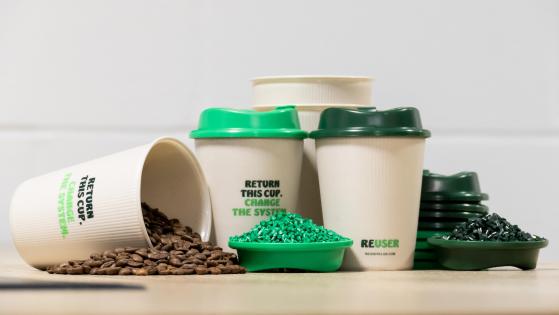
IDC supported Reuser in the design and development of a reusable coffee cup lid as part of a fully circular system aimed at reducing single-use packaging waste. Working with emerging bio-polymers derived from renewable feedstocks, the team balanced sustainability goals with durability, cost, and manufacturability. The project moved rapidly from concept to production in just six months, demonstrating how thoughtful material selection and engineering can enable scalable circular solutions while maintaining everyday functionality.
Parking Sensor Holder – Sustainable Design for Manufacture
For Hope Technical, we redesigned an automotive parking sensor holder to significantly reduce environmental impact while improving manufacturability and cost efficiency. Using locally sourced recycled plastic and eliminating the need for a heavy metal retaining plate, the team simplified the assembly into a single, fully recyclable component. Lifecycle analysis showed the new design delivers dramatically lower carbon emissions over its lifespan, demonstrating how intelligent engineering and material choices can create solutions that are both commercially and environmentally stronger.
Solar Water Heater – Low-Carbon Everyday Energy
SolarStore, conceived and developed by IDC, provides free hot water using solar energy via a robust, inflatable collector. Its low cost and rapid energy payback highlight how sustainable product design can address real user needs while reducing carbon impact through innovative use of energy harvesting and materials.
The strongest sustainable product design outcomes are rarely created by one sweeping change. They tend to come from a series of well-chosen decisions from an experience team, that reduce impact while protecting performance and commercial viability. When sustainability is supported by strong design methods and measurable criteria, it becomes easier to prioritise and deliver. That is where meaningful progress usually comes from, and it is the mindset behind the frameworks, methods and tools we build into our work. If you want practical guidance to support your team’s next steps, our Resources for Sustainable Design provides a clear starting point, or feel free to get in touch with our team and we can help you build your next sustainable product.Making Sustainable Product Design Achievable