The Hidden Costs of Poor Product Design (and How to Avoid Them)
A common question for manufacturing businesses is: how much does design quality actually matter to the bottom line?
The short answer is that design mistakes rarely stay contained. They surface later as warranty claims, field failures, regulatory delays and expensive rework. When design fundamentals are weak, even well-executed manufacturing cannot prevent commercial issues.
Industry data points to the scale of the problem. Thousands of product recalls are recorded each year across major industries, with many manufacturers reporting costs in the tens of millions per event. In sectors such as medical devices, total recall costs reach into the billions annually. These figures rarely capture the full impact, including litigation, lost market share or long-term damage to brand perception.
In practice, the real cost of poor design is not a single event but a chain reaction that plays out across a product’s lifecycle.

The Warranty Claims Cascade
Warranty costs are often the first visible sign of design weaknesses. When products fail early or behave inconsistently, the financial impact is immediate.
The challenge is that warranty costs persist. A tolerance issue or material weakness affects every unit in the field: what appears manageable during development can become a long-term drain once products are deployed at scale.
Design decisions intended to reduce upfront cost often increase this risk. Components specified without sufficient testing may degrade faster in real-world conditions. Assemblies that perform well in controlled environments can fail under variation in use, temperature or handling.
Reputation and Market Perception
Financial costs are only part of the picture. Design quality also shapes how a product is perceived in the market.
Product recalls and visible failures attract attention quickly. High-profile cases have shown how technical issues can affect not just a single product, but confidence in an entire brand. Even without a formal recall, negative user experiences surface quickly through reviews and professional networks.
For consumer products, usability issues or durability concerns can influence purchasing decisions at scale. For B2B products, reputation spreads through industry relationships. Equipment that is known to require frequent servicing or cause downtime becomes harder to specify in future projects.
Once a negative perception takes hold, it is difficult and expensive to reverse.
Regulatory Delays and Compliance Risk
Design weaknesses frequently appear during regulatory review, where they are particularly costly.
In medical devices, for instance, usability issues or gaps in risk mitigation can lead to rejected or delayed submissions. Addressing these problems late requires redesign, additional testing and resubmission, alongside lost time in the market.
For products requiring CE marking under MDR, incomplete or inconsistent design documentation can prevent approval entirely. Reconstructing technical files after the fact is far more complex than building them alongside development.
Similar patterns exist in consumer products, where safety-related issues can trigger recalls or enforcement action. These problems are rarely caused by manufacturing alone - instead typically being rooted in decisions made during design.
The Cost of Late-Stage Rework
The later a design issue is discovered, the more expensive it becomes to fix.
During early development, problems can often be resolved through relatively simple changes. Once tooling is committed, components are ordered and suppliers are engaged, even small adjustments can have wide consequences.
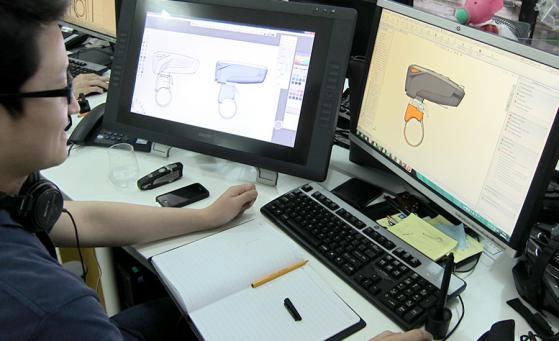
A minor geometry change in CAD can lead to new tooling, scrapped parts and delays to production schedules. These costs are often spread across different teams and budgets, which makes them easy to underestimate.
In reality, the combined impact of engineering time, tooling changes, supply chain disruption and delayed revenue can exceed what it would have cost to resolve the issue properly at the outset.
Service and Support Burden
Products that are difficult to service or diagnose create ongoing cost after sale.
Poor fault indication, lack of modularity or unclear interfaces increase the time required to troubleshoot and repair. This drives up service costs and affects customer experience.
In more complex systems, failures can cascade. A single component issue may damage adjacent parts or require extensive disassembly to access. These outcomes are usually predictable during design, but only if serviceability is considered deliberately.
Returns and Reverse Logistics
Returns are another direct consequence of design quality.
Products may be returned due to failure, but also because they are difficult to use or do not meet expectations shaped by competing products. Even when technically compliant, poor usability can result in lost sales.
Handling returns adds further cost through inspection, refurbishment and logistics. In many cases, returned products cannot be resold as new, turning revenue into loss.
Why Early-Stage Design Matters
Across all of these areas, the pattern is consistent. Problems addressed early are significantly cheaper than problems addressed after launch.
Thorough development work reduces uncertainty while changes are still easy to make. User research highlights usability issues before interfaces are fixed. Tolerance analysis identifies risks before parts are produced. Testing validates assumptions before supply chains are committed.
This work requires investment, but it prevents much larger costs later.
In our work with manufacturers, this is often the dividing line between projects that scale smoothly and those that encounter repeated issues after launch.
The Business Case for Better Design
The financial case is straightforward.
Organisations can invest in understanding requirements, validating decisions and testing designs during development. Or they can absorb the cost of warranty claims, recalls, rework and lost reputation after launch.
Industry data shows how large these downstream costs can be. Even a single recall event can reach tens of millions, without accounting for longer-term effects.
Design quality influences not just performance, but manufacturability, usability, compliance and serviceability. Each of these factors affects whether a product succeeds commercially.
Looking Ahead
As products become more complex and regulatory expectations increase, the cost of design mistakes is rising.
Manufacturers are less able to rely on post-launch fixes. Issues are more visible, more regulated and more expensive to resolve. The alternative is a more rigorous development approach that identifies and resolves problems early, when they are still manageable.
If you are developing a complex product, early design decisions will shape everything that follows. Getting them right reduces risk, protects margin and improves the likelihood of a successful launch.
Explore our design and development capabilities or get in touch with our experienced team to discuss your next project.

About the Author
Stephen Knowles is the Managing Director of IDC. A chartered engineer with 25+ years experience leading technical and non-technical product developments in the medical industry. With a PhD in Mechanical Engineering and a thorough understanding of design and manufacture, Stephen is often invited to speak on the subject of product development. Contact: stephen.knowles@idc.uk.com