Designing Inclusive Products: Accessibility Principles for Every Sector
While sometimes treated as a specialist requirement, inclusive product design is a crucial consideration when developing reliable products for medical, industrial, and consumer sectors. These products are rarely used under ideal conditions, with users differing in terms of strength, dexterity, and mobility.
They may be fatigued, working under pressure, or wearing restrictive protective equipment. The variables are endless, and designing for that variation isn’t an additional feature or afterthought. It’s key to ensuring consistent performance, longevity, and safe use.
Account for Strength and Mobility Differences
Everyone is different when it comes to their physical capability. In medical environments, people use equipment for extended periods while wearing gloves. In industrial settings, tools are used repeatedly and in confined spaces. Consumer products must function comfortably across a vast range of ages and abilities. So, a one-size-fits-all approach just doesn’t cut it.
Issues regularly arise during prototype evaluation, such as controls that look comfortable in CAD but feel awkward in real-world use. A structured ergonomic assessment early in the development process helps avoid these constraints before geometry is fixed. Force analysis, task mapping, and observational testing all help to gauge the appropriate dimensions and operating loads. Opting to address these factors at the concept stage massively reduces the need for redesigns.

Visual and Tactile Clarity
Accessibility can mean a lot of things in product development, including how clearly a device conveys its function. Interfaces that lack a clear structure and intention, or that have low contrast, require more cognitive effort from users. In clinical or industrial environments, lighting conditions and a range of distractions are already in play, further hindering user clarity. If someone cannot immediately recognise primary controls, errors and delays are more frequent.
Tactile design plays an equally important role. During hands-on reviews and testing, users often identify controls by feel while looking elsewhere. In the medical industry, it’s this ability to use devices while focusing on the task at hand that saves lives. Meaning that flat, uniform services make this more difficult.
Inclusive product design creates a visual structure that makes essential functions instantly identifiable. Contrast, spacing and proportion all contribute to visibility in varied conditions, while surface transitions and texture highlight interaction zones for more confident use.
Left/Right-Handed Use
A common issue in product design is the unintentional optimisation for right-handed users. Anyone who’s left-handed and has used a device designed in this way will understand the difficulties it introduces. These issues may not even be obvious during early modelling, as they typically become apparent during physical evaluation, where grip, thumb reach, and control access differ a lot between users.
To reduce the reliance on a single dominant hand, inclusive design considers balanced layouts, altered weight distribution, and centralised controls. Where internal design limits perfect two-hand use, careful review of grip position and task sequencing can reduce disadvantages. Small adjustments at this stage can prevent larger usability compromises in future.
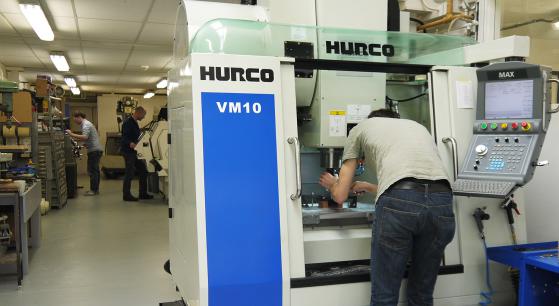
The need for inclusivity in product design goes beyond a user’s physicality. It’s also essential to consider cognitive accessibility as an equal priority. Complexities and inconsistencies in the design structure both increase mental effort and the likelihood of errors. Be it the pressures of the medical sector or the multitasking nature of industrial environments, products are expected to function intuitively with minimal instruction. There are several ways to include inclusivity in development, such as user journey mapping and task analysis to identify factors that may cause delays or confusion. Formative evaluation is also effective for finding any friction points, no matter how subtle, that weren’t clear during reviews. The focus here isn’t on removing complexity, but on organising functions to maximise efficiency. Inclusive product design should always reflect real environments, where they’ll be used, rather than ideal scenarios. When designing models, gloved use, background noise, poor lighting and many other factors need to be considered. These factors can be better understood using contextual research and user testing, helping designers achieve the necessary geometry and control placement before any engineering decisions are finalised. While adjustments at this stage may be minor, they can massively improve comfort, efficiency of use, and safety. Design approaches established in regulated sectors, especially medical device development, are transferable to industrial and consumer products. This is because the underlying motives remain the same, which is to ensure reliable performance across a wide range of capabilities and conditions. If accessibility considerations are introduced late, they tend to compete with pre-established architecture and cost constraints. However, integrating them from day one means they inform proportions, material choices, and even interface ideas. All working together in a cohesive manner. At IDC, inclusivity is addressed within every stage and element of a product’s design. This ensures that usability requirements are established, evaluated, and ultimately resolved alongside engineering possibilities. This more integrated approach improves product design not only where compliance is a requirement, but also for dependable everyday use. Learn more about how IDC’s multidisciplinary teams support inclusive, high-performance product development across sectors by exploring our services.Managing Cognitive Load
Designing for Real Operating Conditions
Embedding Inclusive Product Design in Development

About the Author
Stephen Knowles is the Managing Director of IDC. A chartered engineer with 25+ years experience leading technical and non-technical product developments in the medical industry. With a PhD in Mechanical Engineering and a thorough understanding of design and manufacture, Stephen is often invited to speak on the subject of product development. Contact: stephen.knowles@idc.uk.com