What Is Human Factors Engineering?
Human Factors Engineering is the discipline of designing products, systems and processes around the capabilities and behaviours of the people who use them. It brings together engineering, psychology, ergonomics and user research to ensure that products are safe, intuitive and effective in real-world conditions. It’s a fundamental pillar of successful product design and delivery.
Rather than assuming how users should behave, Human Factors Engineering examines how people actually interact with products under realistic conditions. This includes physical interaction, cognitive workload, perception, decision-making and the influence of environment. When these factors are understood and addressed early, products are more usable, safer to operate and easier to adopt.
Across the sectors we craft products for, the consequences of poor usability range from frustration and inefficiency to serious safety risks. Human Factors Engineering allows us to anticipate those risks and design them out before they reach the user.

Why Human Factors Engineering Matters in Product Design
Many product failures are not caused by technical faults, but by human error. However this is often a deeper problem, where design fails to support human behaviour. Human Factors Engineering shifts the focus from blaming users to improving systems.
In medical products, this might involve ensuring that critical information is visible and unambiguous during high-pressure situations. In industrial environments, it could mean designing controls that are easy to operate while wearing gloves or working in poor lighting. For consumer products, it often means creating interfaces that feel intuitive without instruction.
By applying Human Factors Engineering early, we reduce the likelihood of use-related errors and improve overall product performance. This approach aligns directly with how we structure projects through our end-to-end design and development methodology.
Regulatory Compliance and Evidence-Based Design
In medical device development, Human Factors Engineering is closely tied to regulatory compliance. Standards such as IEC 62366 and ISO 14971 require manufacturers to demonstrate that usability risks have been identified, assessed and mitigated through design.
Our medical device design work integrates Human Factors Engineering into the wider risk management and validation process. Usability is treated as a measurable design input, supported by documented research, testing and iteration. This evidence-based approach strengthens regulatory submissions and reduces uncertainty during approval.
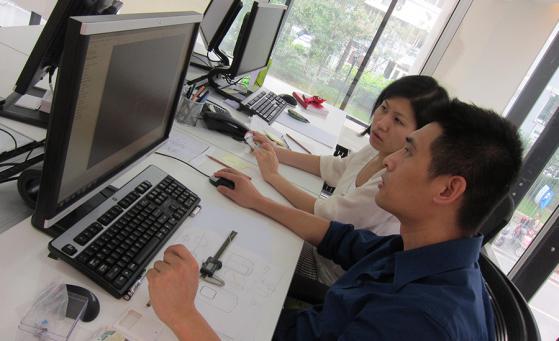
While regulatory frameworks often bring Human Factors Engineering into sharp focus in medical products, the principles are just as relevant in industrial and consumer contexts. In industrial settings, operators may work under physical strain or environmental challenges. Human Factors Engineering helps ensure that equipment communicates clearly, controls are logically arranged and feedback is easy to interpret. This improves efficiency, reduces fatigue and lowers the risk of operational errors. In consumer products, expectations are different but no less demanding. Users expect products to be easy-to-use and inclusive. Human Factors Engineering helps us design for a wide range of usage patterns and innovation requirements - reducing frustration and improving satisfaction. One of the most powerful aspects of Human Factors Engineering is the insight gained from early user interaction studies. Observing users interact with early concepts and prototypes reveals issues that are rarely visible in CAD models or specifications. These studies often highlight mismatches between intended and actual use and expose unnecessary complexity. By addressing these findings early, we avoid costly redesign later and ensure that usability is embedded rather than retrofitted. At IDC, Human Factors Engineering is not a single phase. It is a continuous process that informs concept development, detailed design, prototyping and validation. Products that are easier to use are more likely to be adopted, used, trusted and recommended. They typically require less training and generate fewer support issues to be able to perform more reliably in real-world conditions. From a commercial perspective, this translates into reduced risk with faster time to market and a long-term value which stays consistent. By integrating Human Factors Engineering into our design approach, we help clients move beyond compliance and toward genuinely human-centred products. Whether designing complex medical equipment, robust industrial systems or consumer products for everyday use, understanding people is as important as understanding technology. Human Factors Engineering provides the framework for that understanding, and it remains central to how we design products that work in the real world. Get in touch to find out how our integrated teams can help bring your product to life.Applying Human Factors Across Industrial and Consumer Products
The Value of Early User Interaction Studies
Human Factors Engineering as a Strategic Advantage